The science of art
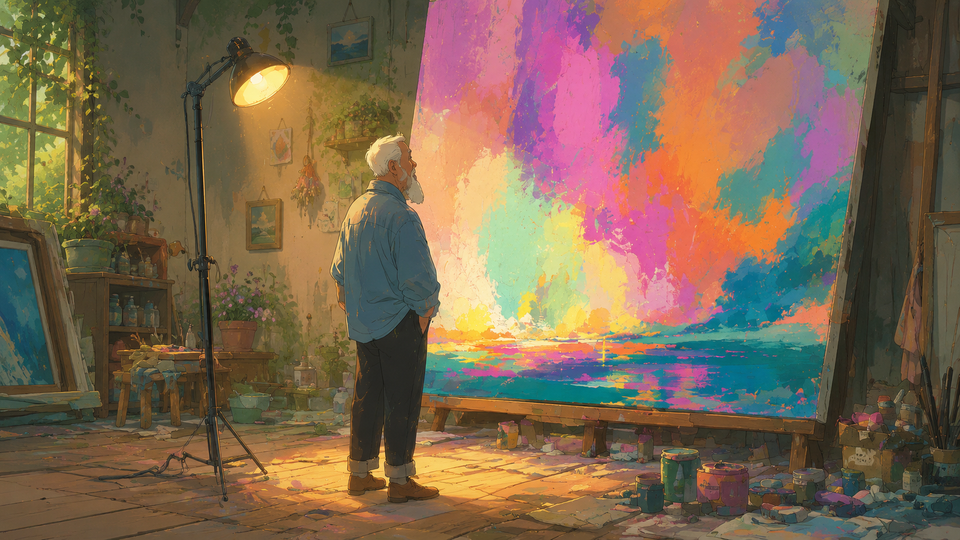
Some years ago, I decided I wanted to learn to paint. My work and education leans technical but I’ve always been very enamored with art.
At the time I was reading a lot of books on learning. I convinced myself the best approach would be to focus on quantity instead of quality of my work. I set a goal to draw or paint every day until I hit 1,000 pieces.
Over the course of some months I accomplished the goal. During that time I did a lot of figure drawing and landscape painting. There was also doodling and trying different techniques.
Something surprised me as I went through this challenge.
The process of creating images wasn’t quite what I imagined. Before this I had seen creating art as an almost mystical ability.
Drawing and painting is a very iterative process. Each piece requires work, observation, and refinement. Each piece builds on the last through a cycle of observation and experimentation.
This is the scientific method.
Sure, the hypotheses and data involved are different. You’re working with aesthetics and taste. But ultimately you’re observing and experimenting to get your results where you want them to be.
This changed my relationship with art. I realized it was something I could engage with more directly. I gained a deeper appreciation of artists.
It also changed my relationship with engineering. I began to see that many decisions didn’t need to be purely rational. Our taste matters when we’re building just like when we’re painting.
You make an observation, make a guess, and make an attempt. After that it’s a matter of seeing what happens.