Lessons from a month of writing on Substack
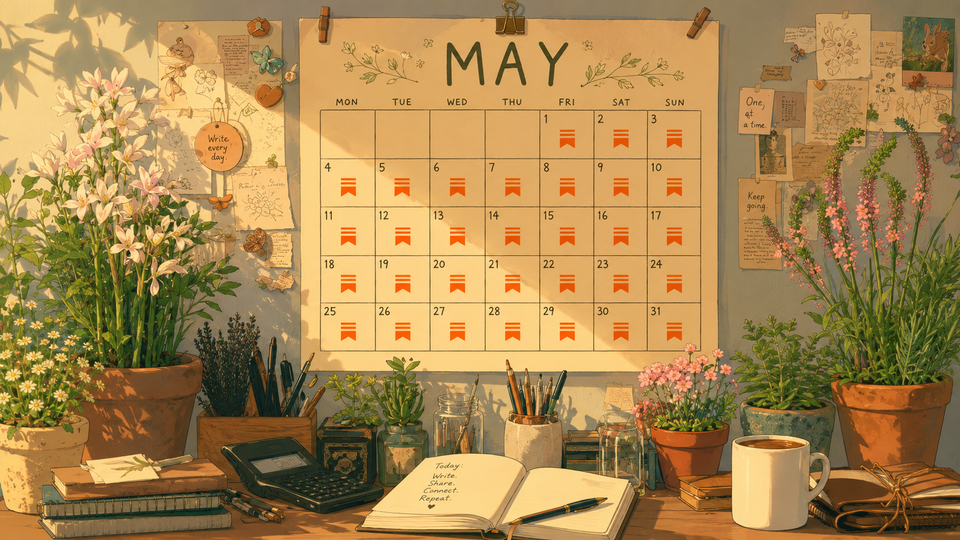
For the past month, I’ve been publishing articles every day.
I wasn’t really aiming to grow my Substack. Even after figuring out how Substack works I decided to continue publishing these into the void.
The goal
My real goal was to get a feel for writing regularly. Not just writing, though. I wanted to write things that are meant to be read. I wanted to figure out where I needed to improve and what I enjoy writing about. Last month I started doing daily “morning" pages” which have a very different purpose.
The problem
For a while, I’ve wanted to start building some kind of online presence. I feel a need to do this for a variety of reasons. A little bit safety for my career and a little bit opening other doors. Perhaps mostly, I have a lot of thoughts and perspective that I hope could be useful to others.
But, I kept stalling out on this, trying to answer all the questions before I started. This is a very bad idea and has a tendency to lead nowhere.
Lowering the stakes
While writing morning pages one day, it occurred to me that I should just crap out a bunch of articles for a month. I was already writing garbage for no one. Wasn’t much different to write for someone even if no one reads it.
And, it’s better to write trash than to write nothing.
Reframing the goal so that you lower the stakes is powerful. It helps you convert overthinking into action. The barrier to entry drops. Action becomes the success state instead of perfection. Inaction becomes failure. It’s hard to improve when there’s nothing to improve but we can always improve what we are already doing.
What did I get out of this?
Not an audience. That’s for sure.
Committed focus is a strategy for repairing shattered focus.
This idea that I can take a month and focus it towards some goal was the biggest takeaway for me. I’m one of those people with a hobby graveyard and too many things to do. Not that I have to do, that I want to do.
I’ve tried so many strategies for dealing with this. Time blocking calendars fills my calendar with things I’ll never do because the stack collapses. Just going with the flow goes to me doing random shit and mostly nothing.
Committing to extended periods of focus is where it’s at for me. I’ve done it before as proof that I could learn to paint. This one started in a similar way.
The idea relates a lot to hobby seasons. As I went through the month I started to see all the benefits that can come out of it. I feel more control even if I really have no specific plan. Reframing the goal from quality to quantity makes the goal feel achievable.
I plan to keep experimenting here.
I need to protect my time.
All that being said, I can’t keep adding daily practices every time I do one of these. That would be unsustainable. I feel like I want to keep some daily writing practices but I also want to try other things like getting back into painting.
There’s all this stuff I like doing and I have very little time to spread between them. That’s what lead to this structured focus in the first place. Having too many daily practices cuts time for each dramatically.
I’m not sure what the ceiling is though and I’m going to feel it out.
It reduced my social media consumption.
Focusing on creating reduced my YouTube habit. This also happened when I did a similar challenge years ago. You don’t have the time to consume because you’re working on your own stuff. The hidden benefit behind that is I don’t even miss it.
Ideally I could find a way to pull historical numbers on this but the YouTube app doesn’t appear to go back further than a week. Most days for the past week are 0 with just one being over an hour. I was listening to lofi while doing something mindless at work.
My average in the past has been well over an hour per day. Last week it was 25 minutes.
I have a clearer sense of what I’m doing here.
I found that I think a lot about taste, identity, AI, attention, product and software development. But that’s a little all over the place.
Going forward, I’m going to focus on exploring these monthly hobby seasons and goals. Along with that I’ll focus on topics like attention, identity, and taking action. I’m going to stay away from topics like AI, product, and software development. Taste falls somewhere in the middle. It’s an aspect of your attention and identity that affects what you make and curate.
I do have a lot of thoughts on digital product development but I’ve never released a successful product. That’s a cold reality that I struggle with. So unless I’m positioning my thinking around what not to do (which I know a lot about) then I don’t have a lot of advice there. Certainly not advice that you couldn’t get from someone else.
I’m also hesitant to give real world work examples because, well, many of them would be considered failures. It would feel like blasting failed projects I’ve worked on with good people. I’d rather blast myself, if anyone.
Daily publishing is too much for me.
For the first week or two my articles were mostly just brain dumps of things that were top-of-mind. Those were pretty easy to write. After that I hit a slump where I felt very much out of things to write about.
Some advice says you need to keep publishing daily to grow but I don’t buy it. There are plenty of people who succeed at writing with much less frequent publishing schedules. Plus, I have a full time job, a family, and other things to do. That’s just not realistic for me.
Writing daily is great.
On the other hand, writing daily gives me a lot of value in the form of just getting things out of my head. I had already learned this from the morning pages. But morning pages are different than writing about something.
Morning pages are pure stream of consciousness that sometimes turns thought provoking. It has this beautiful emergent and clarifying quality.
Daily essays require me to try to pick a point and make it. This is more painful as I sometimes feel stumped. But I’ve gotten a lot of value by trying to routinely solidify my thoughts.
This painful point where I ran out of pre-built steam is where I started to find ways to come up with things to write about. I dredged old chats with friends and AI. I took two ideas that I felt were related but couldn’t quite see how and tried to connect them.
I’ve long been a fan of the idea of writing to learn. It’s this point where you’re following threads and connecting things for yourself that it actually happens.
Substack takes work beyond writing.
I was totally new to Substack when this started. I’d made an account a while ago but did nothing with it. I noticed as I was going that no one except maybe the couple friends I have subscribed were reading my posts.
So, I did some research and learned that I need to do more work to promote my writing. I assumed somehow an algorithm would take care of it, like many other social media platforms. I can’t say I’m particularly thrilled about this but I’m going to give it a shot and see what happens.
What’s next?
I’m going to continue experimenting with these monthly seasons.
I have many ideas for them already. Honestly, I could probably list 50 of them off the top of my head. That’s another kind of proof that they work.
All these ideas and goals realistically need large chunks of time. Focused, dedicated time used to move them anywhere. Giving large hobbies and goals little spurts of time here and there goes nowhere.
Committing and limiting other commitments around them gives them the space that they need. It gives a sense of control and a way to make trade-offs. It helps me think about what is really possible in a year.
With that, the hobby graveyard becomes a hobby garden.


Member discussion